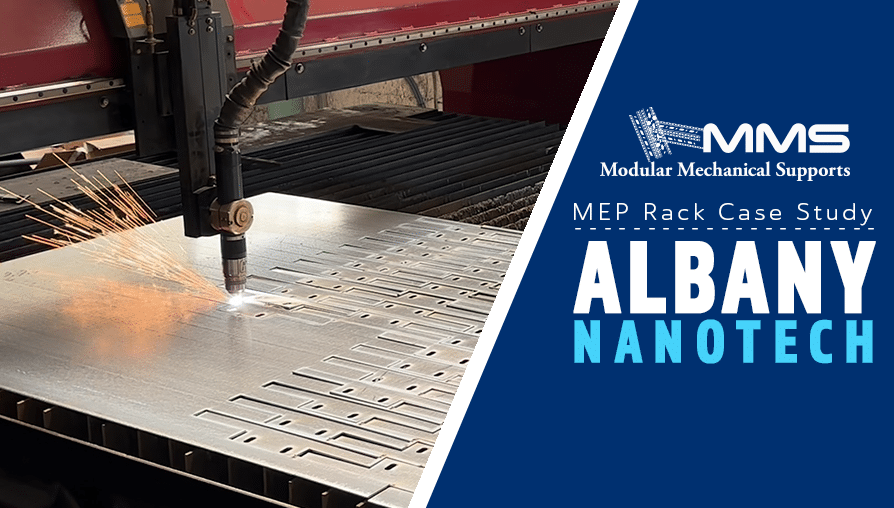
Construction tied to Albany nanotech facilities is driven by installation sequence, not material lead times. Mechanical, electrical, and process systems are routed through shared space, and support framing must arrive ready to install. When key components are unavailable or incomplete, work stops rather than shifting to another area.
On this nanotech building project in Albany, NY, that risk became real. Required fittings and components were not available through standard supplier channels within the narrow time-frame needed to support installation. Instead of waiting on extended lead times, the contractor brought in Modular Mechanical Supports to solve the problem.
MMS was engaged to provide a coordinated solution that combined advanced material sourcing with CNC fabrication, and superior shipment logistics. The objective was to deliver complete kitted MEP rack components to the jobsite, ready for assembly, and aligned with a tight project schedule.
Albany Nanotech and Semiconductor R&D Growth in New York State
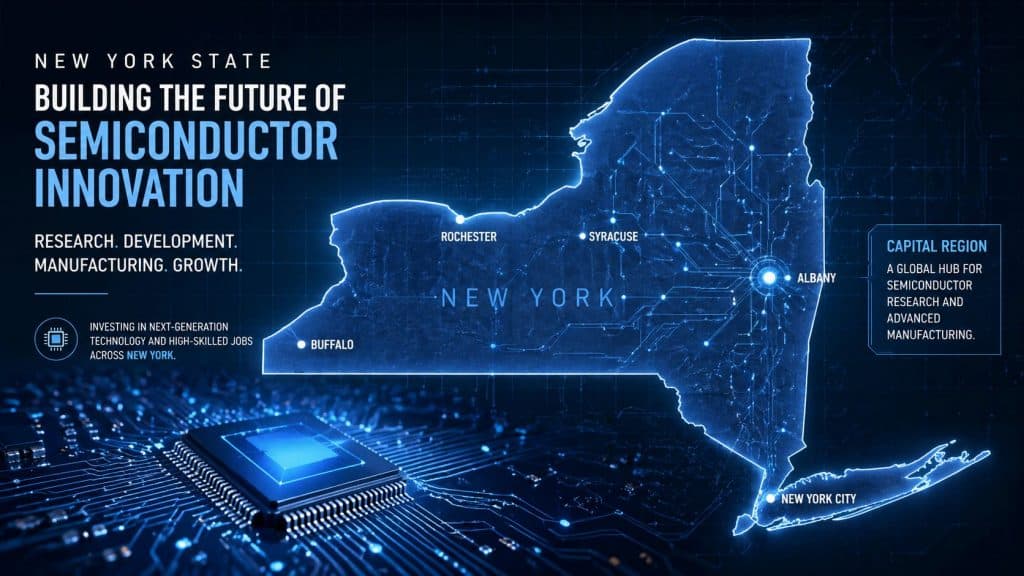
New York State continues to invest heavily in Albany nanotech and semiconductor research, with the Capital Region serving as a primary hub for development. A recent $10 billion public-private partnership announced by NY state is focused on advancing next-generation semiconductor research and expanding existing nanotechnology research center infrastructure in the region.
This level of investment is driving ongoing nanotech building construction, upgrades, and phased expansions tied to evolving fabrication processes and equipment requirements. Projects are often executed in stages, with system layouts defined early and material needing to align with installation sequencing.
As Albany NY nanotechnology and semiconductor development continues to grow, support systems are increasingly designed, fabricated, and delivered as coordinated assemblies. That shift places more emphasis on pre-cut material, exact-fit components, and organized delivery methods that support installation without rework.
Nanotech Building MEP Rack Requirements and Project Constraints
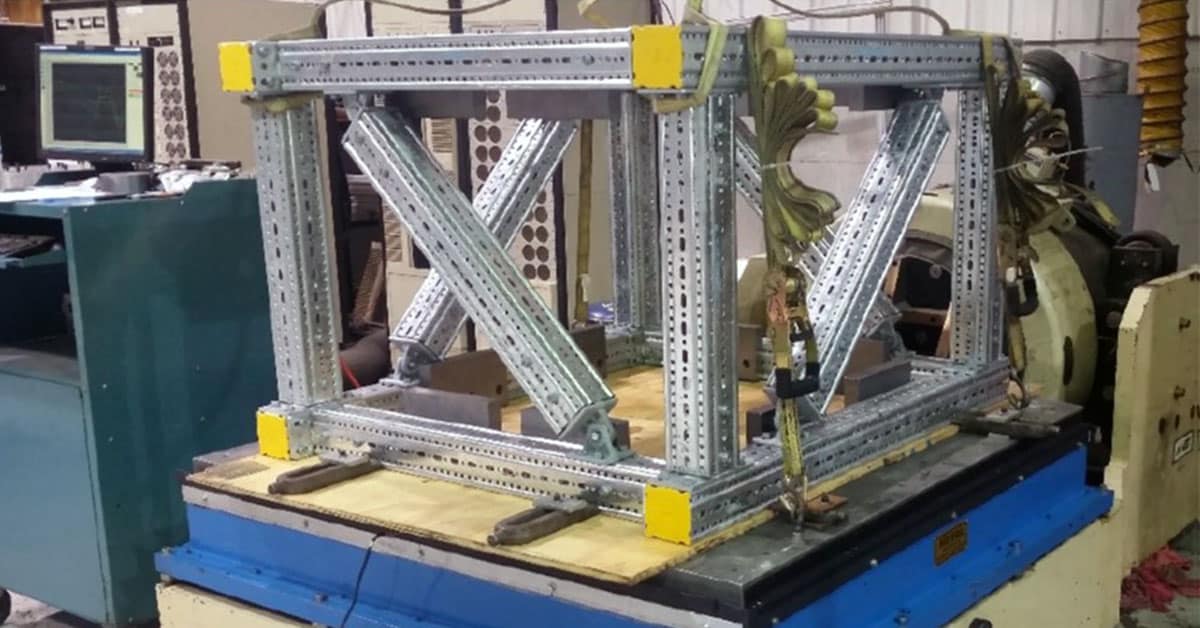
In this particular instance, rack designs were provide by the customer, but design-engineering and stamping are services we offer. Our team reviewed the drawings with the customer’s design team to come up with the project materials list and immediately got to work devising a plan to assemble all of the materials on time. All strut channel had to be cut to exact, customer-specific lengths before delivery. Field cutting was not part of the installation plan, so each piece had to match the dimensions shown in the drawings to ensure proper rack assembly.
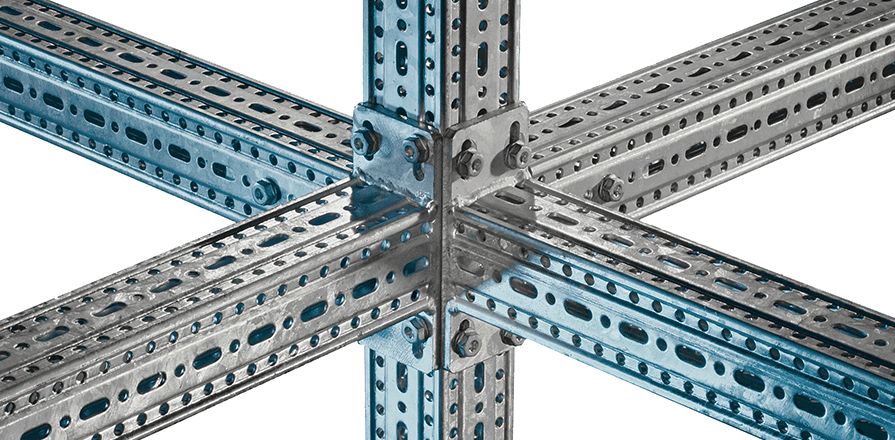
Fittings were also defined by the rack designs and could not be substituted. Hole patterns, connection orientation, and geometry had to match exactly. Because the racks were built from kitted material, even a single incorrect or missing fitting could delay the assembly of an entire rack rather than just a single connection.
In addition to cutting and fabrication, all components had to be organized into kits that corresponded to individual rack assemblies. This meant grouping cut channel, sourced fittings, fabricated components, and hardware together and labeling them based on the drawings. That level of organization allowed field crews to move directly into assembly without sorting through bulk material on site.
Fitting Availability Challenges in Nanotech Building Construction
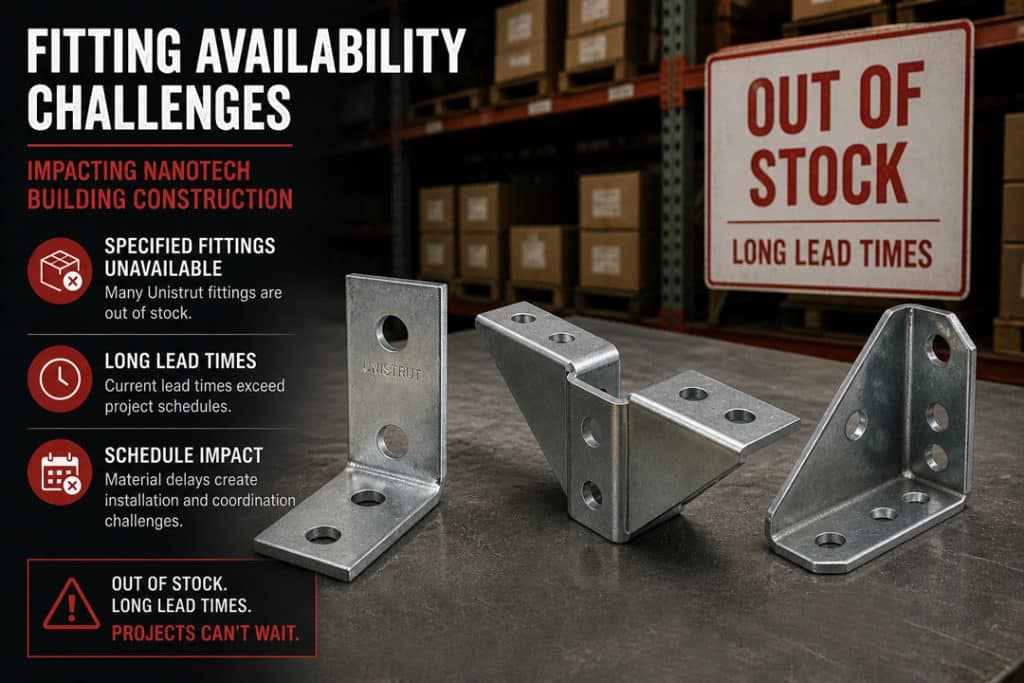
The primary issue on this project was the inability to source required fittings within the project schedule. Standard strut manufacturers and distributors could not provide key components in the configurations and quantities needed to support the MEP rack designs. This was not a minor delay. Critical fittings were simply not available when needed.
The fittings defined in the engineered drawings were specific to the rack configurations and could not be replaced with alternate parts. Substituting different fittings would have required redesign or field modification, neither of which was viable within the project timeline. With supplier lead times extending beyond the schedule, sourcing alone could not solve the problem.
Coordinating Multi-Source Material Procurement Under Tight Deadlines
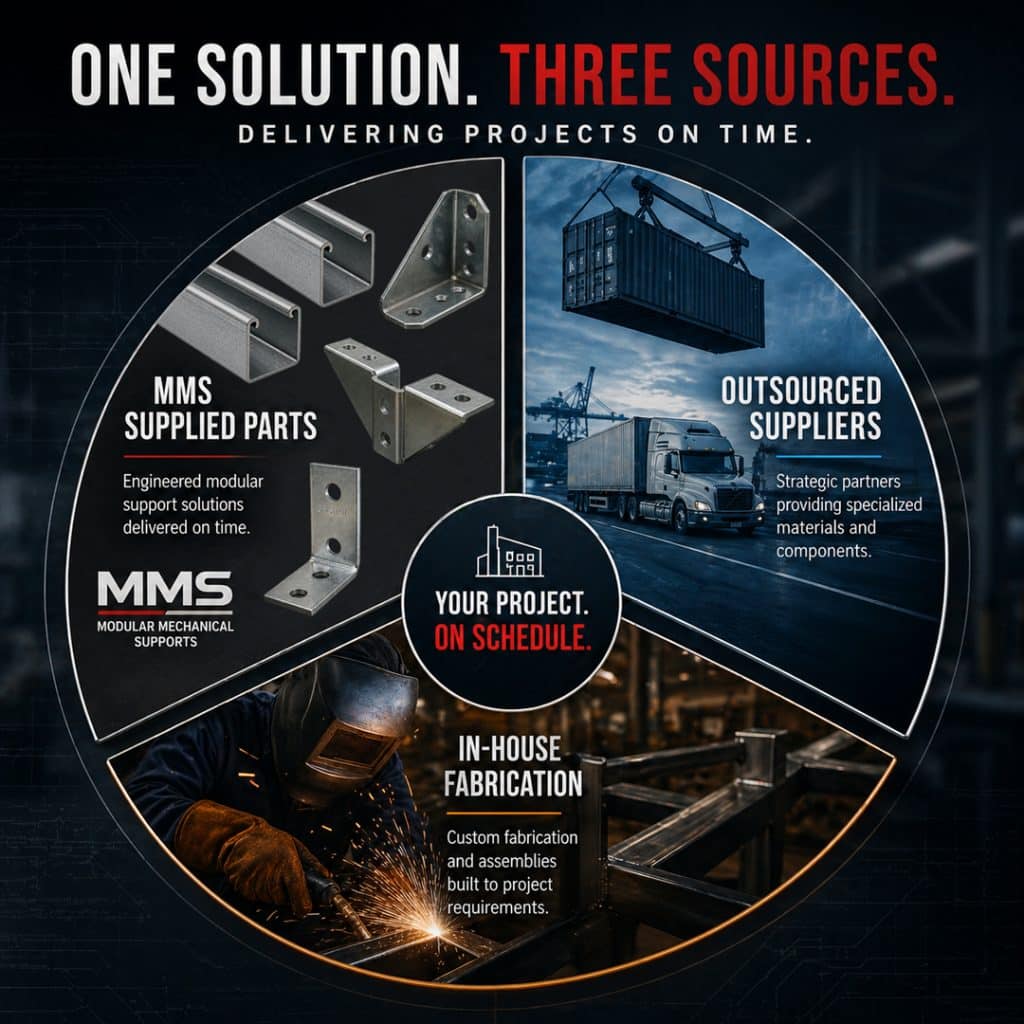
Material sourcing was handled through a combination of distributor inventory and multi-source procurement. As a Unistrut distributor, standard channel, threaded rod, and available fittings were sourced directly through established supply channels where inventory was available.
When required components were not available through primary manufacturers or their distribution networks, alternate manufacturers were engaged to source exact-match fittings that aligned with the project drawings. This allowed the material package to stay consistent with the engineered rack designs without introducing substitutions that would impact assembly.
Material was brought in based on production requirements rather than bulk delivery. Channel moved directly into CNC band saw cutting operations, while fittings were staged for kitting or fabrication depending on availability. This approach allowed sourcing and production to operate at the same time, rather than waiting on complete shipments.
Custom Fabrication for Unavailable Strut Components and Fittings
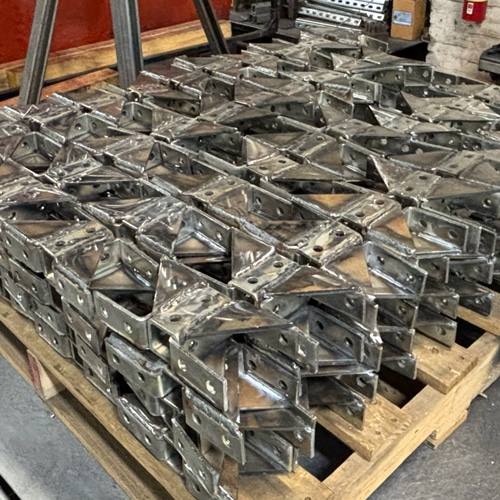
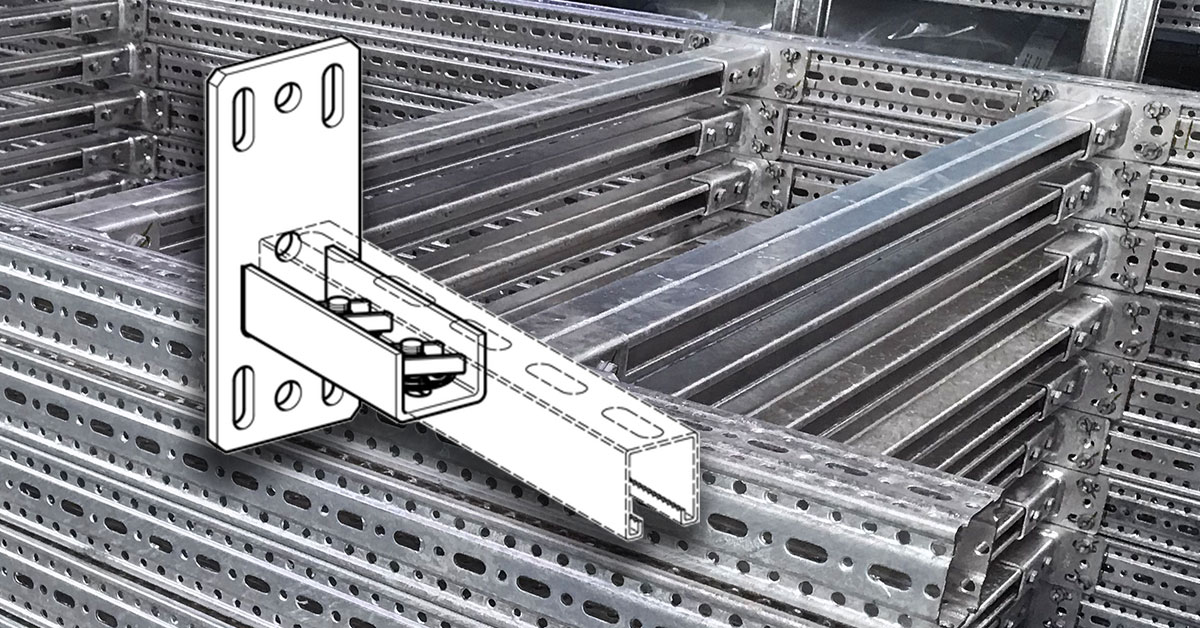
Where specified fittings could not be procured through standard distribution channels, exact-match components were manufactured in-house to match the engineered rack designs. This ensured that all connections aligned with the drawings without requiring redesign or field modification.
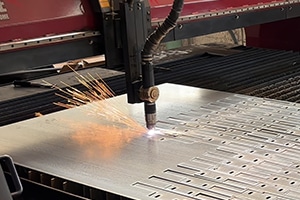
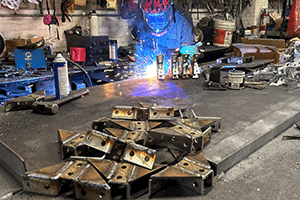
Flat plate fitting blanks were processed using CNC plasma cutting to produce the required profiles, hole patterns, and connection geometry. These components were then formed on press brakes to achieve the specified shapes and orientations defined in the product specifications. The additional step of welding had to be performed on gusseted fittings.
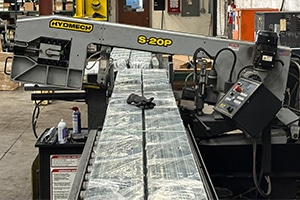
At the same time, strut channel was processed using CNC band saws to cut P1001, P1000, and P4101T to exact project-specific lengths. As a distributor, this allowed standard material to be converted into install-ready components before it reached the jobsite. Following sourcing and fabrication, all components lacking the appropriate green finish were processed through powder coating to maintain a consistent finish across the entire material package.
All components were then grouped, labeled, and delivered as part of kitted rack assemblies, allowing installation crews to assemble systems directly from the delivered material.
Kitting and Labeling for MEP Rack Assembly
Once fabrication, sourcing, and finishing were complete, material was grouped into kits based on the MEP rack designs. Each kit included the cut channel, fittings, fabricated components, and hardware required for a specific rack assembly.
Components were labeled to match the drawings so field crews could identify and assemble each rack without sorting through mixed material. This allowed installation to move directly into assembly rather than spending time organizing parts on site.
Kitting and labeling connected the work done in design and fabrication to how the racks were built in the field. Without it, the benefits of prefabrication would have been lost during installation.
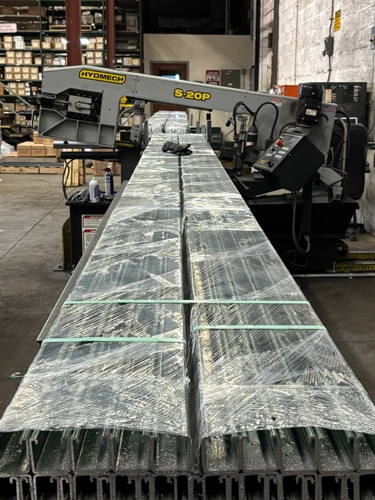
Production Scope: Channel Cutting, Fitting Fabrication & Welding
- 43,000 ft of P1001 channel cut to length
- 4,700 ft of P1000 channel cut to length
- 3,300 ft of P4101T channel cut to length
- 2,720 fittings with welded gussets
- 5,000+ welds completed in-house
- 12,600 fittings sourced and powder coated
- 1,200 fittings manufactured in-house
Production was structured around running cutting, fabrication, and finishing operations in parallel. CNC band saws were used to process all channel based on cut lists from the shop drawings, ensuring consistency across repeated pieces.
Fitting work incorporated use of our CNC plasma cutting table, press brake, and certified welders. Powder coating was applied across sourced and fabricated fittings to create a uniform finish, allowing all components to be delivered as part of a single coordinated material package.
Phased Deliveries to Support Albany Nanotech Building Installation
Material was delivered in phases aligned with the installation sequence. The first phase was delivered within four weeks to allow installation to begin, with additional deliveries following based on project progress. In total, there were more than 10 shipments of material sent over the course of several months. Phased delivery reduced handling and supported a more controlled installation process, which was necessary given the volume of material and number of rack assemblies involved.
This approach ensured that material was available when needed without overloading the jobsite. It also allowed fabrication and sourcing to continue supporting later phases while earlier assemblies were being installed.
Fabrication, Material Control, and Delivery Sequencing in Albany Nanotech Projects
Maintaining progress on this project required control over sourcing, fabrication, and delivery within a single workflow. That’s why Modular Mechanical Supports was brought in.
As a Unistrut distributor, MMS sourced available material directly, supplemented it with alternate manufacturers when needed, and produced exact-match fittings in-house when components could not be procured. All material was cut, kitted, and labeled to match the MEP rack drawings, allowing crews to assemble without delays.
That combination of distribution, fabrication, and kitting is what kept installation moving when standard supply channels could not.