A recent pharmaceutical manufacturing expansion in southeastern Pennsylvania provided a clear example of how prefabrication and modular construction can reshape the delivery of complex mechanical systems. The facility owner, a global life sciences company with strict quality and scheduling requirements, has steadily encouraged its contractors to adopt modular building methods across capital projects. Multi Trade Racks had historically been one of the most schedule-sensitive scopes on these builds, often installed piece by piece in congested corridors after structural steel and concrete were already in place.
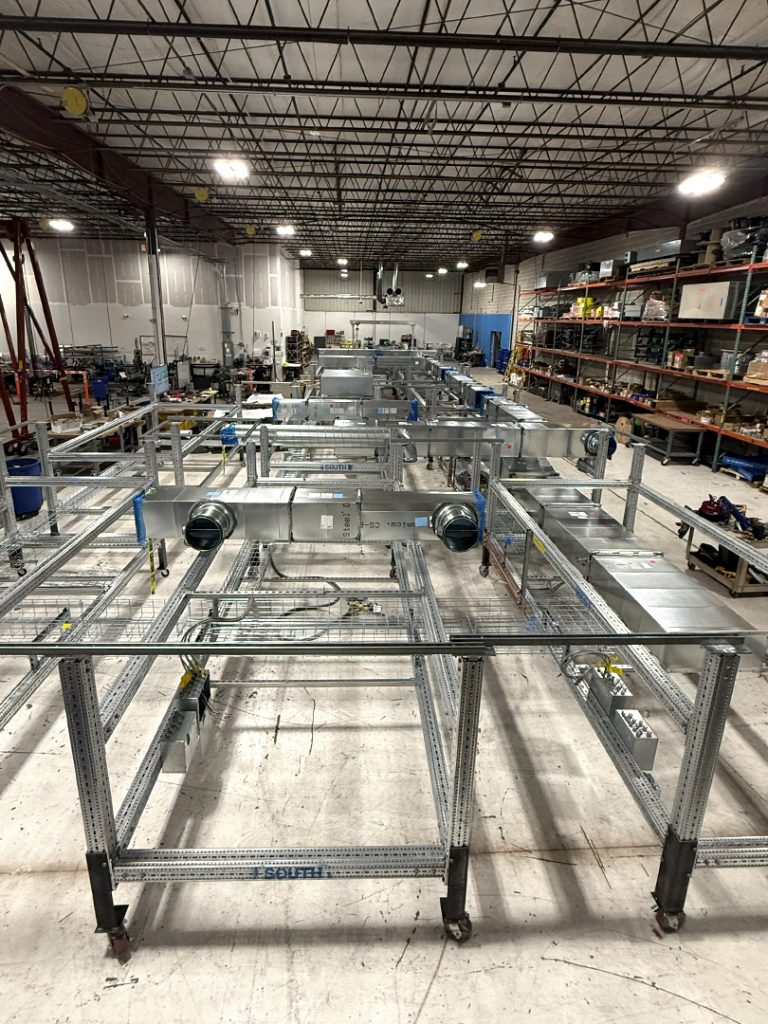
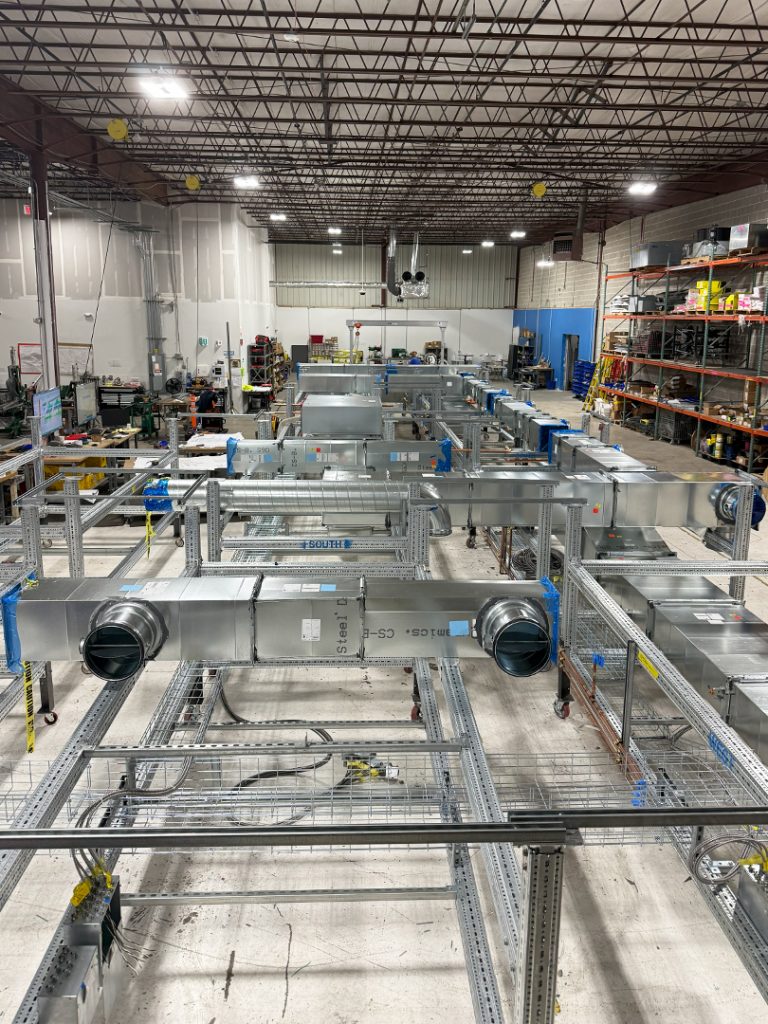
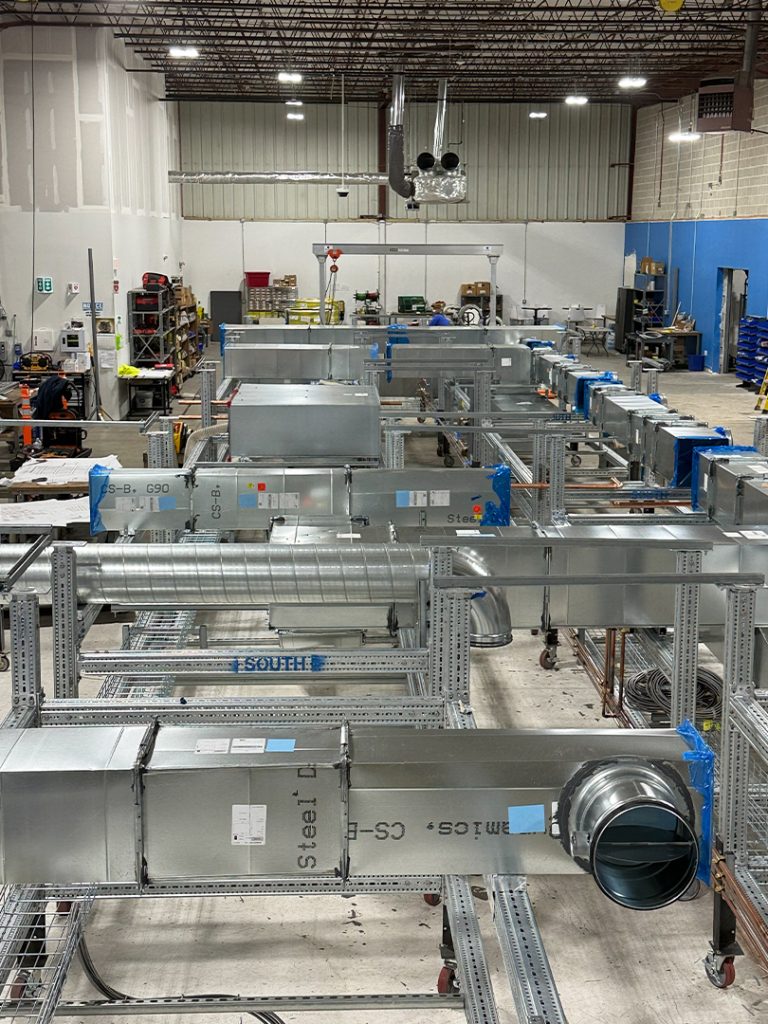
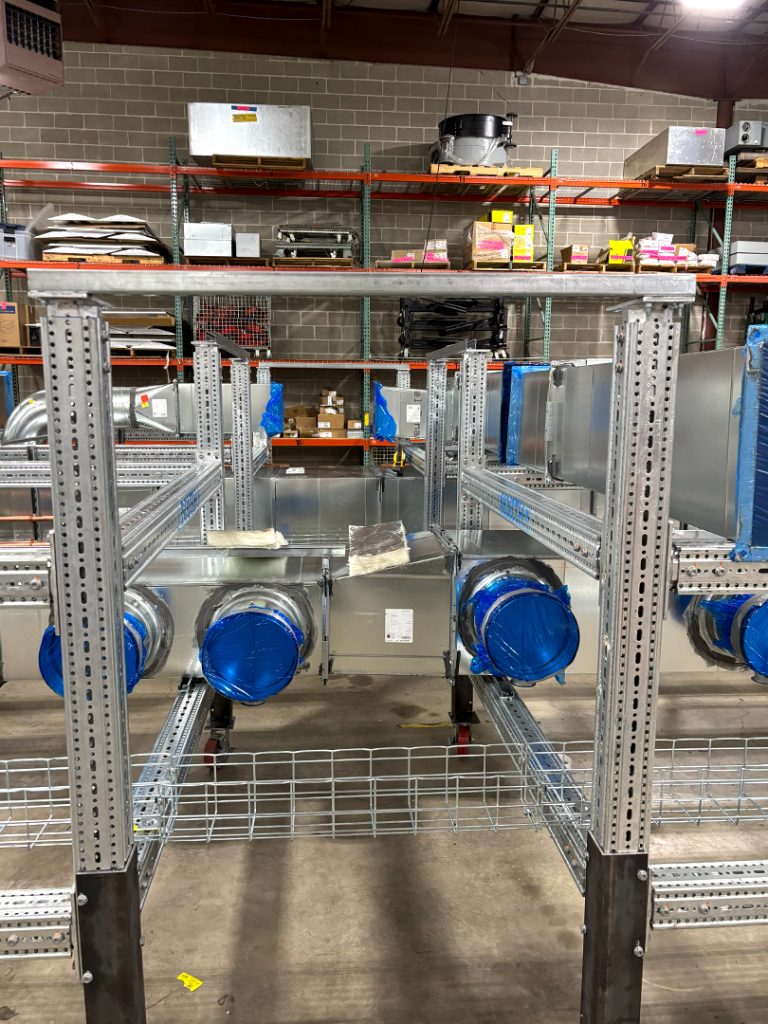
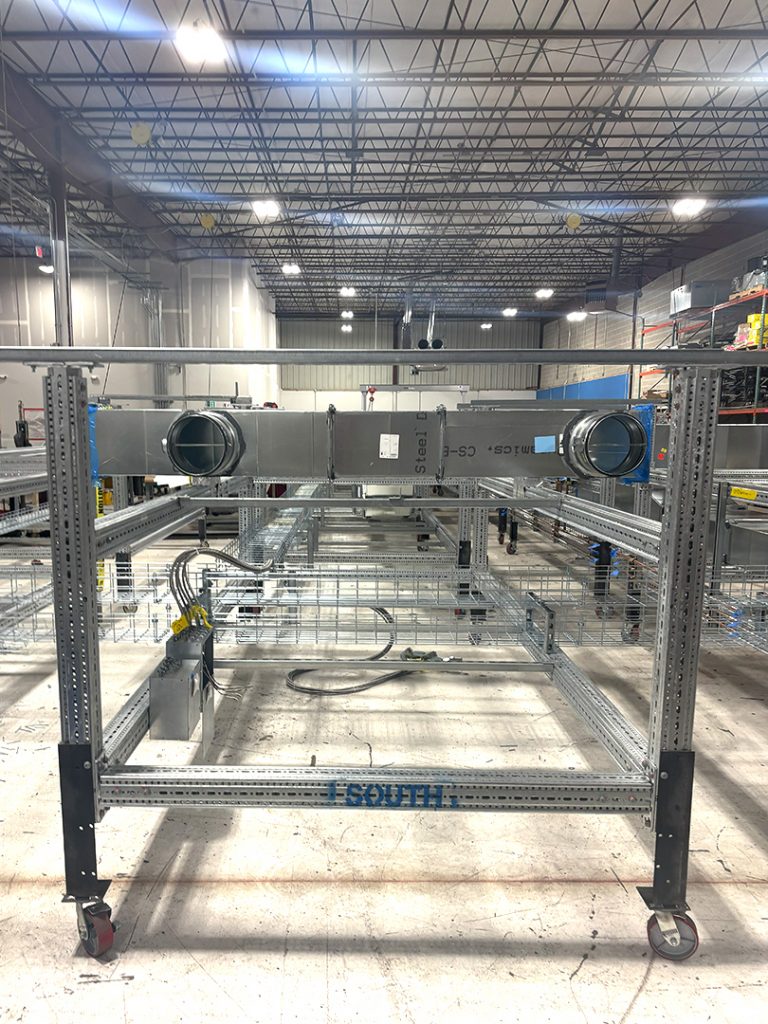
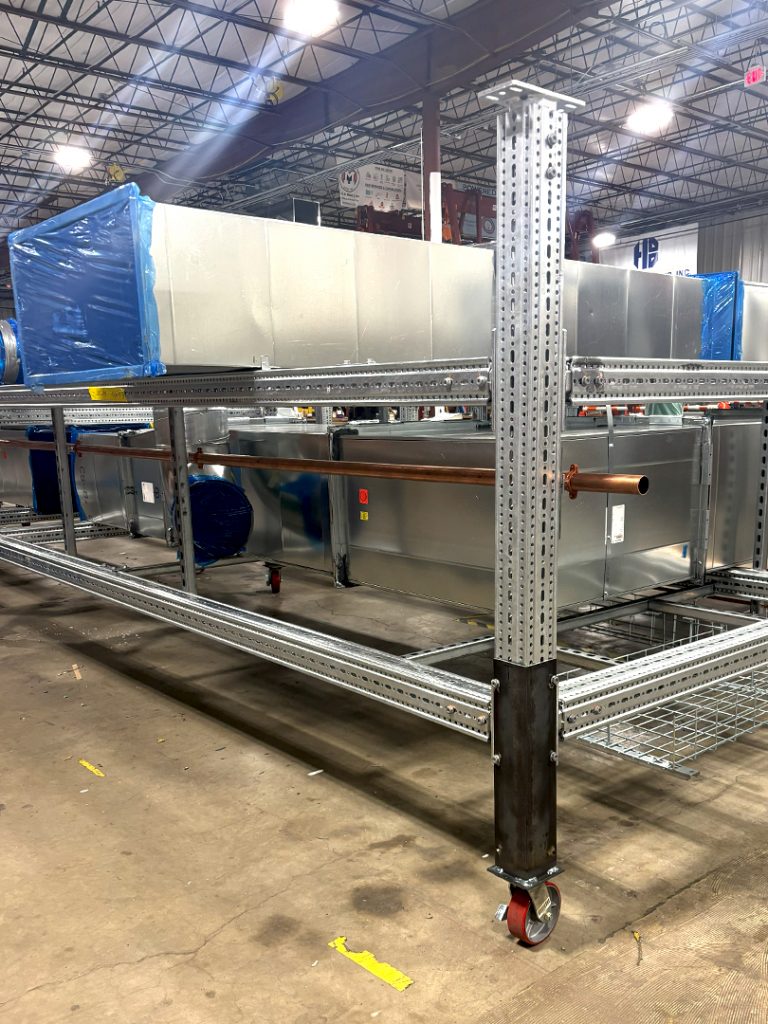
To address that bottleneck, we developed a modular rack system designed specifically for off-site fabrication. Instead of building supports, hanging trapezes, and routing each system independently in the field, the contractor assembled fully coordinated racks inside a controlled warehouse environment. Ductwork, hydronic piping, and other services were installed directly onto the prefabricated frames before shipment. Completed assemblies were then transported to the jobsite and set in place by crane. This shift from field-built to prefabricated modular construction compressed installation timelines by weeks and significantly reduced on-site labor requirements, all while maintaining the quality standards expected in a regulated manufacturing environment.

What is Prefabrication and Modular Construction?
Within commercial construction, prefabrication and modular construction refer to the practice of assembling building components or entire system assemblies away from the final installation location. Rather than cutting, fitting, and supporting each element in place, contractors build coordinated sections in a shop or warehouse, then transport those assemblies to the jobsite for installation. In non-residential environments such as healthcare, pharmaceutical, data center, and manufacturing facilities, this approach is particularly effective for mechanical, electrical, and plumbing (MEP) infrastructure that follows repetitive routing patterns.
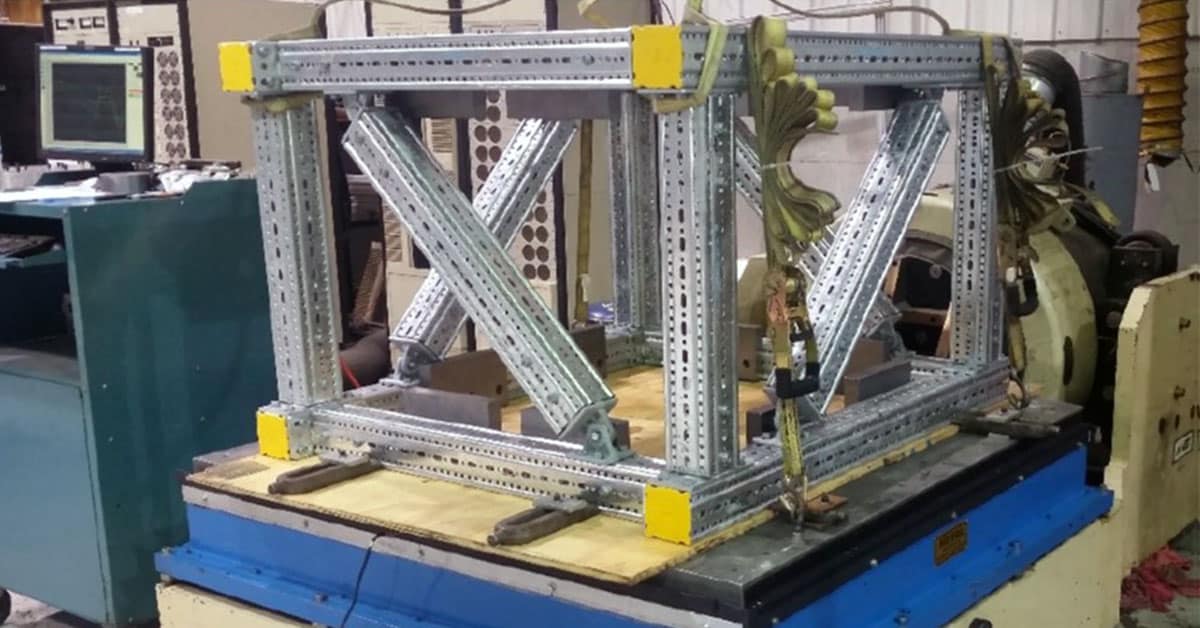
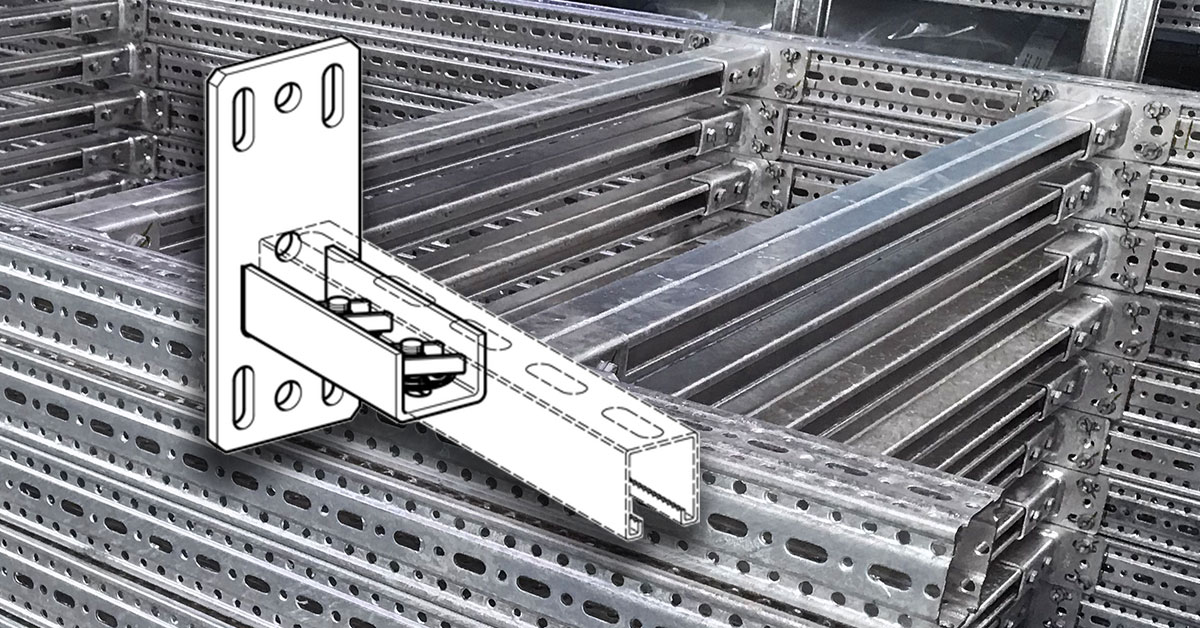
From the perspective of the Modular Mechanical Supports division, prefabrication and modular construction focus on engineered framing systems that serve as the backbone of these assemblies. Instead of relying on individual trapeze hangers and field-measured strut supports, a modular rack is designed as a modular structural unit. The framing is sized to carry the combined loads of ductwork, piping, cable tray, and conduit. Anchor points, lift points, and connection details are defined in advance. When prefabricated modular construction is executed correctly, installation becomes a setting operation rather than a fabrication process.
How BIM Facilitates Prefabrication and Modular Construction
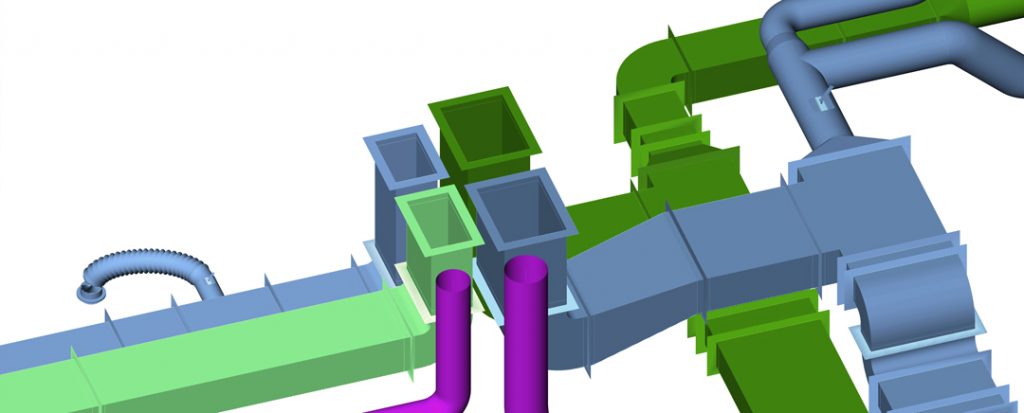
Building Information Modeling, commonly referred to as BIM, is a central tool in modern modular construction and prefabrication workflows. BIM allows design teams, trade contractors, and support manufacturers to coordinate systems in three dimensions before any material is cut. For multi trade racks, this digital coordination step is critical. Clearances, elevations, structural tie-ins, and interferences between trades are identified in the model rather than discovered in the field.
In the context of modular rack development, BIM supports load verification and dimensional control. The framing layout can be analyzed to confirm that channel sections, connections, and anchors are properly sized for the anticipated dead loads and, where applicable, seismic demands. Once the model is approved, spool drawings and fabrication details are extracted directly from coordinated geometry. This reduces guesswork during off-site fabrication and ensures that prefabricated assemblies match the building structure when they arrive for installation. Without BIM-driven coordination, the tolerance stack-up between structural steel, concrete embeds, and mechanical systems would make prefabricated MEP racks far more difficult to execute.
What are Multi Trade Racks (MTR’s)?
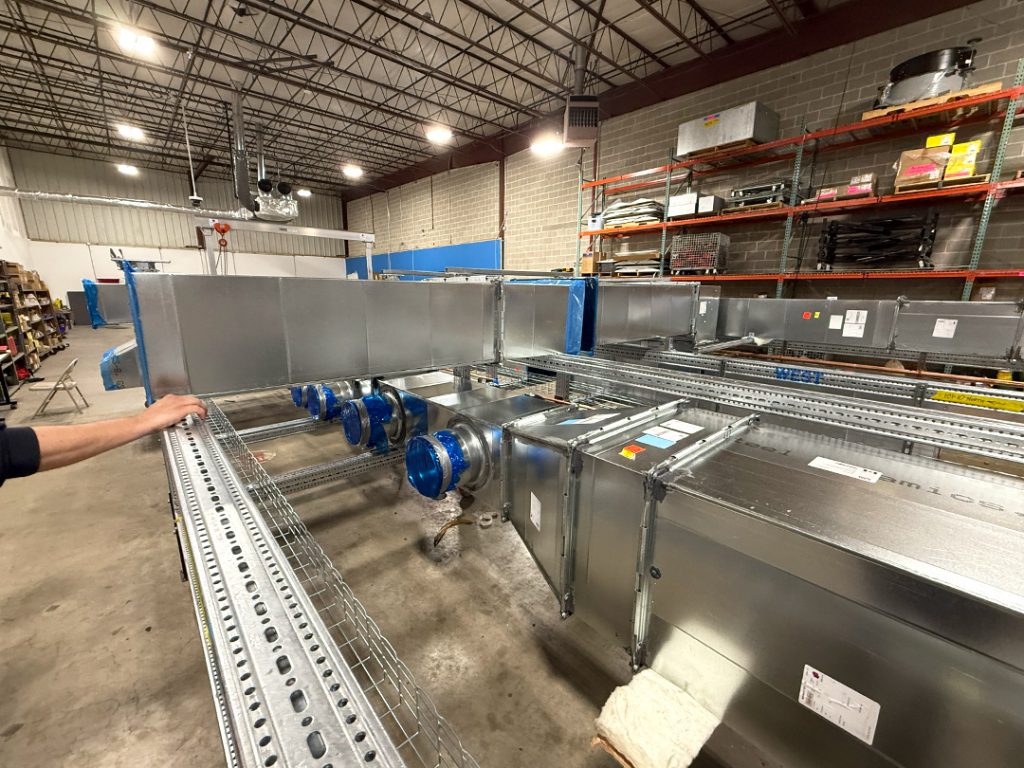
Multi trade racks, often abbreviated as MTR’s, are structural framing assemblies designed to support multiple building systems within a single coordinated unit. They are also commonly referred to as MEP racks, a term that reflects the three primary disciplines they carry: mechanical, electrical, and plumbing. In practice, an MEP rack may support duct mains, chilled water supply and return lines, process piping, fire protection, cable tray, and conduit all on one engineered frame.
The purpose of a modular rack is to consolidate supports and align systems in a predictable configuration. Instead of each trade installing independent hangers at varying elevations, the rack establishes fixed tiers and attachment points. This improves spatial organization and reduces clashes in overhead corridors. MTR’s are typically installed in long, linear runs through interstitial spaces, utility corridors, or manufacturing bays where services must be distributed efficiently.
From a construction standpoint, MEP racks are most effective when used in buildings with repetitive layouts or long utility spines. Pharmaceutical plants, hospitals, laboratories, and data centers often fit this profile. The rack framing is fabricated from structural channel or modular strut components, with cross members spaced to accommodate pipe clamps, trapeze hangers, or direct-mounted duct supports. When incorporated into modular construction and prefabrication workflows, the racks are assembled off-site, preloaded with systems, and then installed as finished sections.
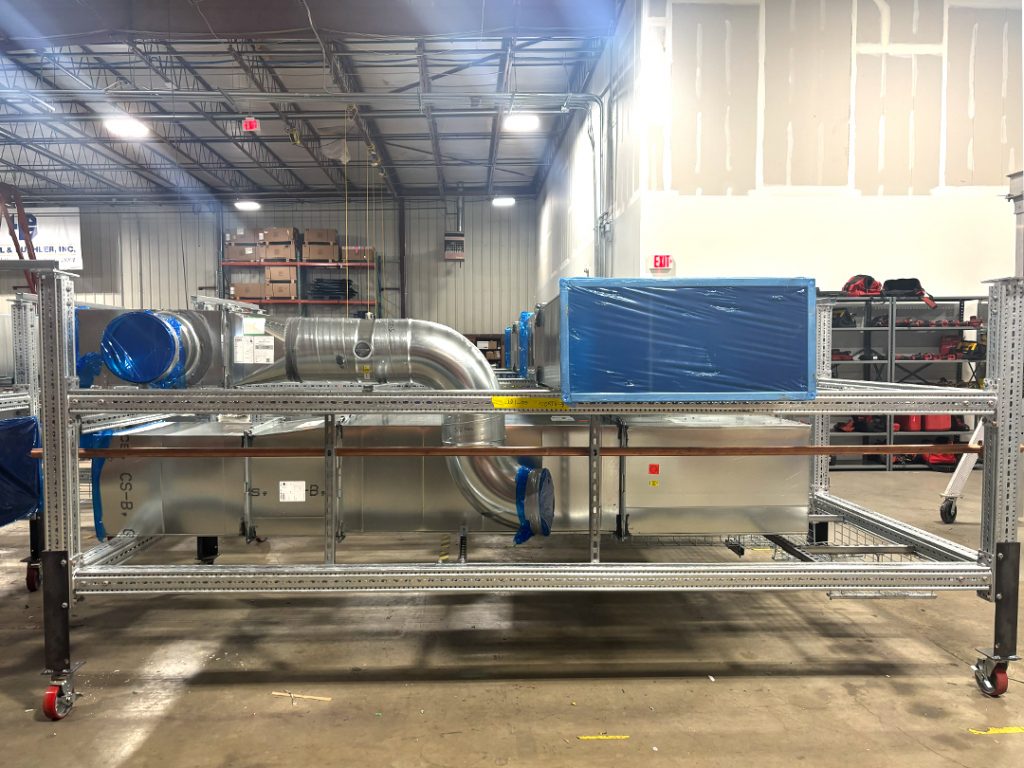
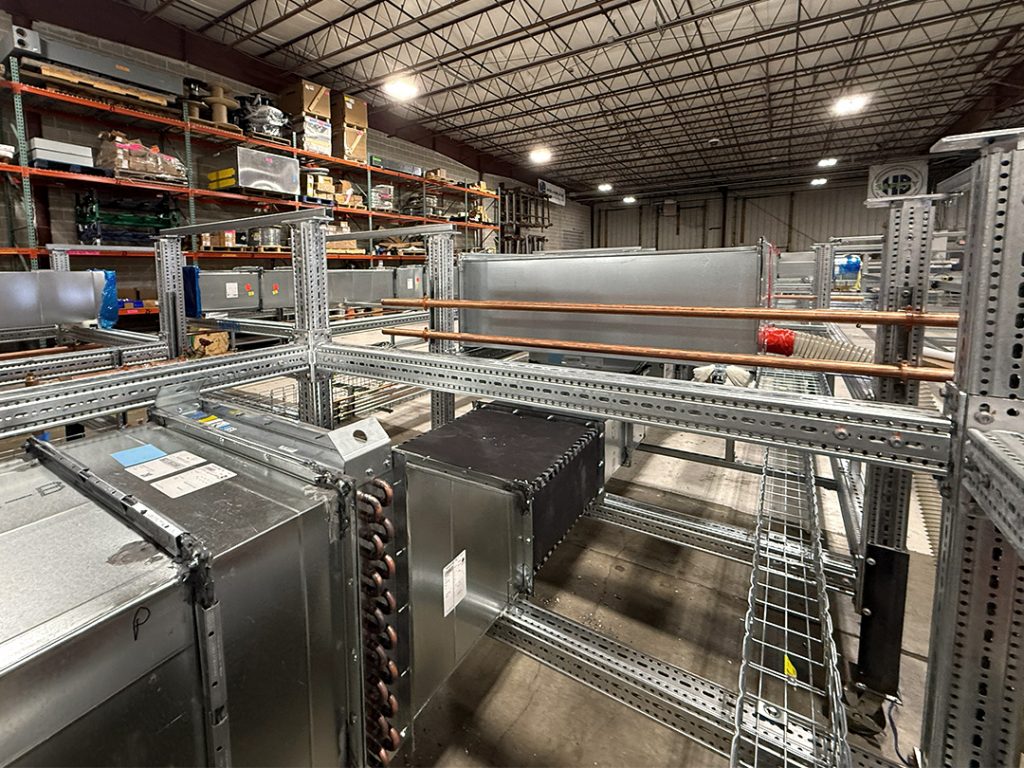
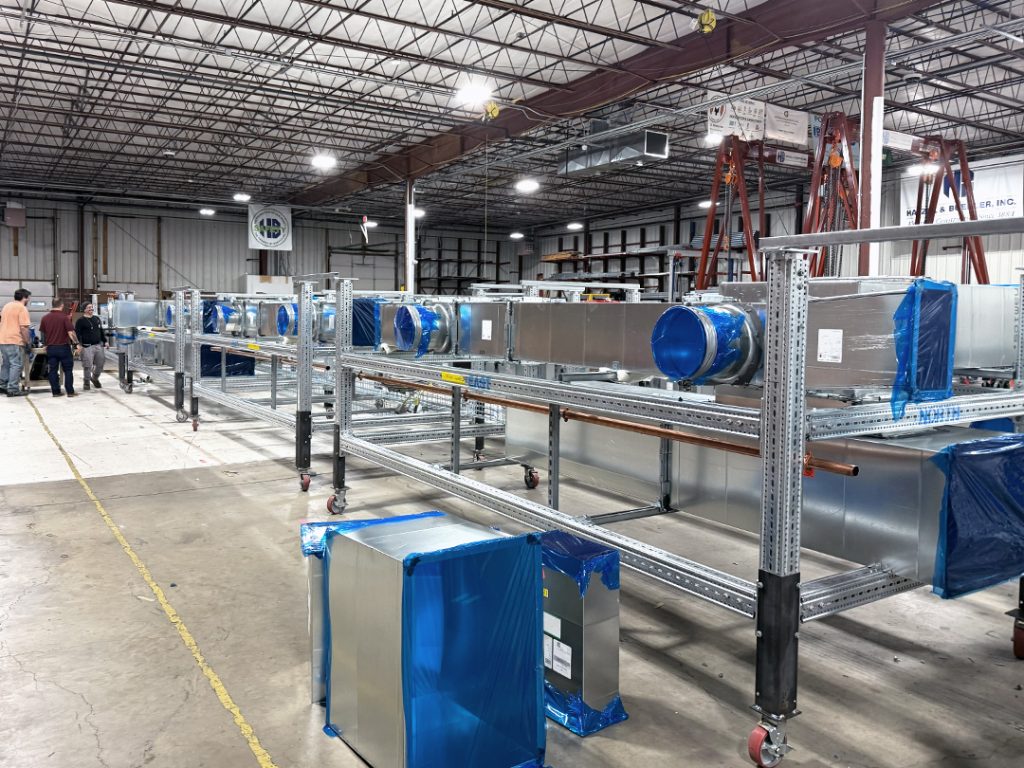
The Top Three Benefits of Modular Construction and Prefabrication
- Reduce On-Site Labor
- Increase Installation Speed
- Improve Quality Control
Each of these benefits contributes directly to schedule reliability and cost control on complex commercial projects. Below is a closer look at how each outcome is achieved and why it matters in real-world construction environments.
1. Reduce On-Site Labor
Prefabrication and modular construction significantly reduce the amount of skilled labor required in the field. When multi trade racks are assembled off-site, fabrication crews work in a controlled warehouse setting with access to material handling equipment, layout tables, and consistent power supply. Field crews are no longer responsible for measuring, cutting, and fitting each support component at elevation. Instead, they receive completed modular rack sections that are ready to be set and secured.
This shift lowers congestion in active construction zones. Fewer trades are working simultaneously in tight overhead spaces, which reduces safety risk and coordination delays. Labor hours that would have been spent on lifts and ladders are redirected to shop fabrication, where productivity per worker is typically higher. In markets facing skilled labor shortages, this reduction in on-site manpower can be the difference between meeting a milestone and falling behind schedule.
2. Increase Installation Speed
Installation speed improves because the majority of fabrication occurs in parallel with other construction activities. While structural steel and concrete work proceed on-site, modular racks are being built and preloaded with ductwork and piping off-site. Once the building is ready to receive them, cranes or forklifts can position entire assemblies in a fraction of the time it would take to build them in place.
For large MEP racks, this approach can compress weeks of field installation into a series of coordinated setting operations. Predefined connection points allow for rapid tie-ins between rack sections and vertical risers. Because the assemblies were built to coordinated BIM models, field adjustments are minimized. Faster installation not only protects the project schedule but also allows subsequent trades to begin work sooner, improving overall project sequencing.
3. Improve Quality Control
Quality control is strengthened when fabrication occurs in a stable environment. In a warehouse, assemblies are built at working height with clear visibility and access. Supervisors can inspect welds, bolted connections, and support spacing before shipment. Pipe supports can be aligned consistently, and spacing between tiers can be verified against design documents without the constraints of overhead installation.
This controlled setting reduces variability. In highly regulated facilities such as pharmaceutical or food production plants, consistent support spacing and system alignment matter. Prefabricated modular construction allows for repeatable fabrication practices and documented inspections prior to installation. When racks arrive on-site, they represent finished assemblies rather than partially completed work, reducing the likelihood of field rework.
Does Off Site Fabrication Save Money?
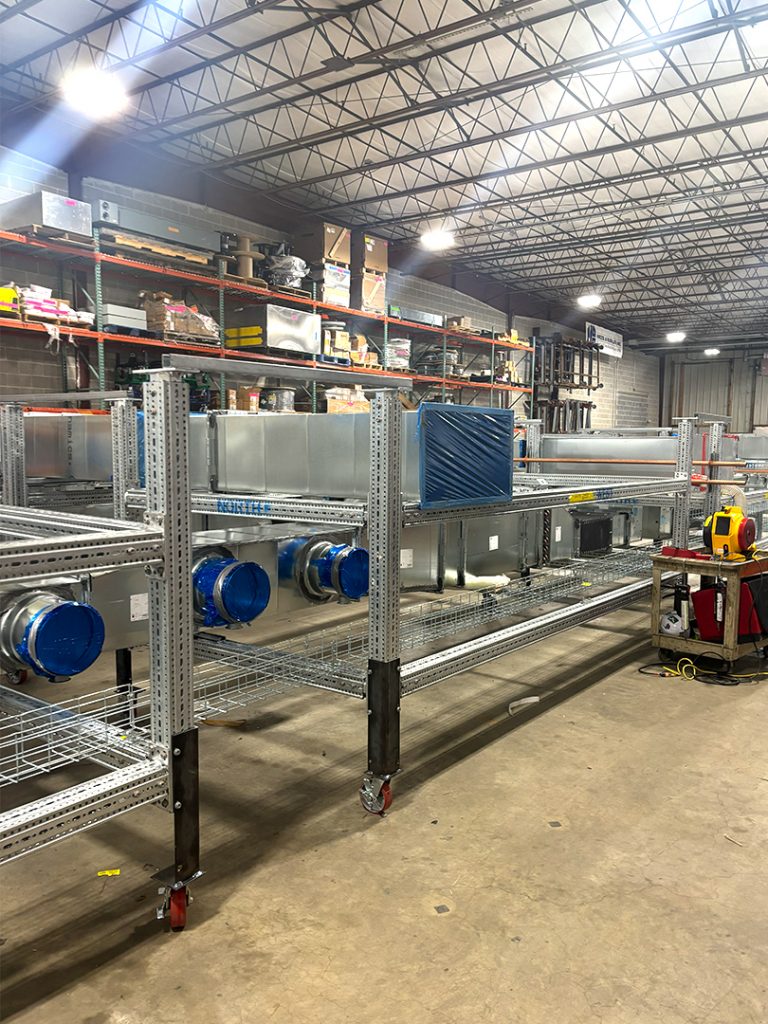
Off-site fabrication saves money when it is applied strategically to repetitive and coordination-intensive scopes such as MEP racks. The most direct cost impact comes from reduced on-site labor. Field labor is often more expensive due to site conditions, access limitations, and safety requirements. By relocating a significant portion of fabrication to a controlled facility, contractors can complete more work hours per shift with fewer disruptions.
The increase in installation speed also affects cost. Shorter installation durations reduce general conditions expenses tied to extended project timelines. Equipment rentals, temporary facilities, and supervision costs are all influenced by schedule length. When prefabrication and modular construction compress the mechanical rough-in phase, downstream trades can begin sooner, reducing overlap and inefficiencies.
Improved quality control further contributes to financial savings. Rework in overhead mechanical systems can be expensive, particularly after ceilings are installed or systems are pressurized. By building and inspecting assemblies off-site, contractors reduce the likelihood of misalignment, improper spacing, or missed coordination conflicts. Fewer corrections in the field translate directly into lower labor costs and reduced material waste.
Why Partner with Modular Mechanical Supports for Modular Rack Projects
Modular Mechanical Supports brings focused experience in engineered framing systems for MEP racks and modular rack assemblies. Our role extends beyond supplying modular framing and fittings. We collaborate with contractors during the BIM coordination phase to confirm loading criteria, connection strategies, and installation sequencing. This early involvement ensures that the prefabricated modular construction strategy aligns with structural constraints and project requirements.
On the pharmaceutical expansion referenced earlier, we worked closely with the project team to design modular rack frames that could be assembled with minimal labor while maintaining structural integrity. Lift points were incorporated into the framing layout, and connection details were standardized to simplify field setting. By supporting the shift to off-site fabrication, we helped the contractor reduce on-site labor, accelerate installation, and improve quality control.
For organizations pursuing modular construction and prefabrication strategies, selecting a support partner who understands both structural framing and field installation realities is critical. Multi trade racks are not light-duty channel assemblies pieced together with standard hardware. They are engineered structural frames designed to carry combined mechanical, electrical, and plumbing loads across defined spans while maintaining dimensional stability during transport and lifting.
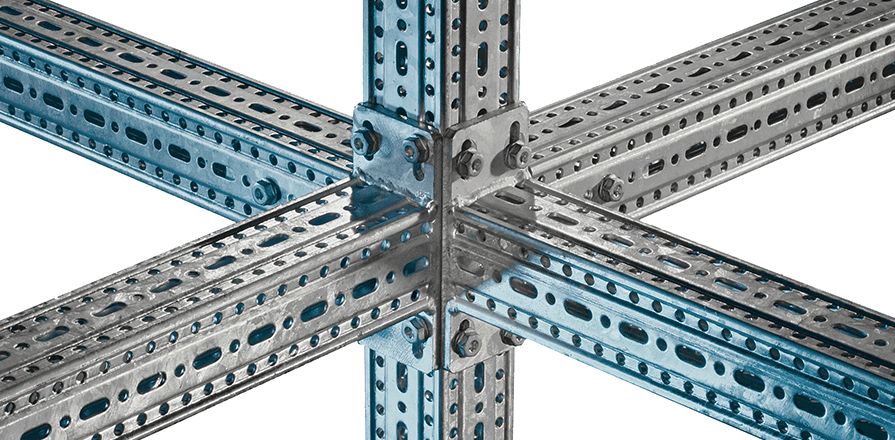
As one of only a few authorized U.S. distributors of the Sikla Structural Modular Framing System, we design racks around heavy structural profiles and bolted moment connections intended for high-load applications. These systems provide significantly greater load capacity and stiffness than traditional light-gauge channel supports, making them well suited for large-diameter piping, dense utility corridors, and multi-tier MEP racks. By combining this structural framing approach with coordinated BIM integration and off-site fabrication planning, we deliver modular rack assemblies that meet demanding project requirements for strength, accuracy, and repeatable installation performance.
Partner with us Today!

1 (800) 285-3056